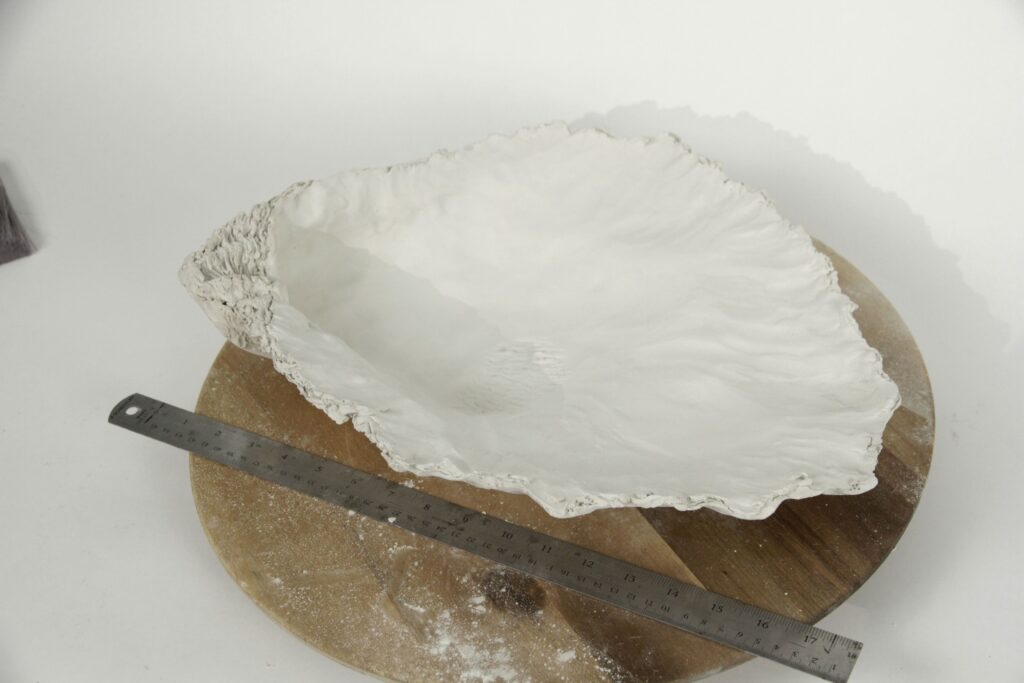
01.23.2025 – 07-84,06
17.25″ X 13 X 6.5″ bisque fired domestic porcelain

17.25″ X 13 X 6.5″ bisque fired domestic porcelain


..of and to the kiln on this beautiful Eastern Shore morning.
Yesterday, while 3 pieces cooked to cone 05, I experimented with some glaze application techniques for the shell interiors. The challenge with trying to create some amount of accuracy is working with the unpredictability of glazes, underglazes and stains. Once fired, those things almost never look the same as they did during the application process. So, to the boneyard we go.
On average, I loose 30% of the green or unfired pieces to cracking. The natural oyster is so varied in it’s texture and thickness and clay doesn’t dry evenly when the thickness is too varied, especially at this scale. The most vulnerable areas are the lips where the difference of 1/16″ could mean a solid candidate for an ultimately finished piece or another addition the the “boneyard” under my wife’s buffet in the foyer of our home.
I actually only fire a few of them. Most of those that crack or are just plain bad get rendered back into clay. I still have a never-ending supply of failed but fired pieces to experiment with.
Once I’ve gleaned what I can from the glaze experiments they go back to the “yard”. In the case of these four examples, I see they’ve spilled over into the living room. As you can see, when they fail during glaze firing to cone 6, they fail spectacularly.


Stay briny, my friends.
Jeff
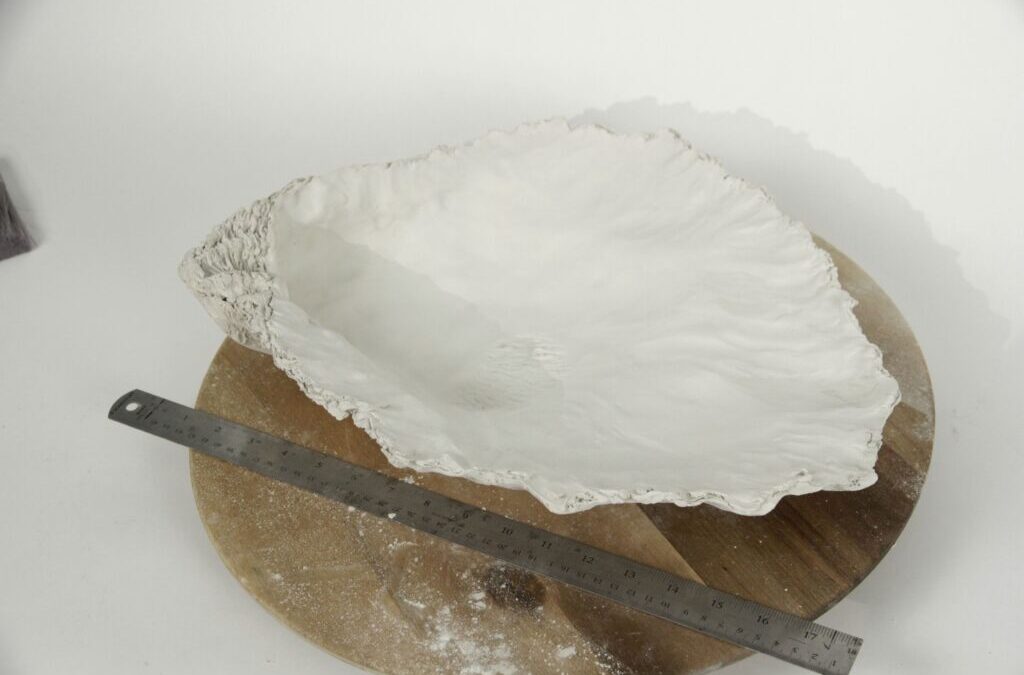
This is the first study of shell #07-84,01 that came straight from the drying rack this morning. The porcelain clay dries to a cool light grey. Once bisque fired to cone 05 or 1870 degrees Fahrenheit it will have a light warm cream color. Being a mid-fire clay, it will ultimately be heated to cone 6 or 2165 degrees where the unglazed or tinted porcelain will become even warmer in color. At this temperature the clay will become fully vitrified, or transformed into a solid glass like ware. The fact that it has survived the drying process is a great sign! We’ll see how it handles the two firing processes. Check back later and see how it turns out
Cheers!
Jeff.